Showing posts with label Stephen Hazan Arnoff. Show all posts

Thursday, April 7, 2016

My Salvation? Jude, Elijah and Bob Dylan Revisited


Recently I had the great pleasure of giving a lecture at the University of North Carolina at Asheville on Bob Dylan  – about Bob Dylan and Man and God and Law to be precise. This reminded me that it's about time to put together work and thinking on Dylan and religion in a book. So over the next few months, that's what I intend to do.

And this work sends me back to some of the writing I have delighted in sharing about Dylan and matters of the spirit over the years. Check out this piece on I'm Not There, Todd Haynes' wonderful reworking of a very Greil Marcusian vision of Dylan (that we dig) and his own delicious view of the music, the man, art, love, quests and all other kinds of good stuff. Elijah and Julie Taymor's "Across the Universe" show up too.

Find the piece in original form here, or in full below.


When poet-provocateur Allen Ginsburg pulls up in a golf cart on the side of the highway and asks, “What now?,” Jude – one of six versions of Bob Dylan in Todd Haynes’ film I’m Not There – looks at the sky, his face colored by the desperation and irony that have animated every mask he has worn in a long and unpredictable career. “My salvation?” he half mumbles, both a question and an answer. After they shake hands goodbye, Ginsberg veers off the road toward a cemetery, saying: “Well, we’ll see what we can do.”


Like most of Haynes’ film, the first meeting between Bob Dylan and Allen Ginsberg is constructed of a fluid association of anecdotes, lyrics, and wishful thinking, but like any good poetry, it gets closer to the truth than what may or may not have actually happened.

Dylan’s calling towards salvation – what Ginsberg in the golf cart deems both “mission” and “coercion” – is literal, religious, mystical, or otherwise playfully disembodied and transcendent from day-to-day life; and this calling is what flips Dylan’s story forward through a deck of cards of identities including rail riding troubadour (ten year old Marcus Carl Franklin), rebel folkie (Christian Bale), romantic poet (Ben Whishaw), Jude the revolutionary rocker (a masterful Cate Blanchett), megastar family man (Heath Ledger), fundamentalist preacher (Christian Bale, again), and frontier loner (Richard Gere).


“I bargained for salvation an’ they gave me a lethal dose,” Dylan wails in 1974’s “Shelter from the Storm.” And so it goes for artists with creative vision, arrogance, and stamina as deep as his. From Dante to Shakespeare to William Blake, salvation has always been the ultimate destination: the “what now,” the just around the corner, the just within reach, and the never quite real enough to keep.

It has taken Dylan a lot of disguises to stay safe on this trail, and cinematographer Edward Lachman, nominated for an Oscar for his last collaboration with Haynes in 2002’s Far From Heaven, captures long, patient frames and shotgun flashes of Dylan face-to-face with truly lethal doses of salvation, moments when the messiness of life forces the high flyer back to the ground.

Three of these instances stand out: the cocky young singer just arrived in New York, seated sorrowfully before Woody Guthrie dying in hospital bed in 1961; Ledger’s silent despair, sorting family photos after a messy mid-70s divorce; and above all, the tight mask of the ultra hip, self-invented rocker dissolving at the betrayal of a snooty British journalist nemesis who reveals that Jude the legend is in fact a Jewish kid from Brookline, MA named Aaron Jacob Edelstein – the film's version of Robert Zimmerman of Hibbing, Minnesota.

A Tale of Two Wandering Judes
Dylan’s Jude is not the only star by this name rising on cinema screens this season, as the myths of the sixties – and an endless supply of commercials – continue to evolve through the voices of the song books of the masters of the age.

The lead wanderer of Julie Taymor’s story of 60's life and the Beatles, Across the Universe, is named Jude as well; part of the conceit of Across the Universe is to give its characters names out of Beatles songs (Jude's housemates include Prudence, Sadie, and Lucy, and Bono puts in a show-stopping cameo as the hallucinogenic Dr. Robert) so ultimately the entire narrative of the Sixties is told by Beatles songs and enacted by the characters themselves. And just as Dylan/Jude’s marriage unravels with images of the Vietnam War searing television screens in the background in I’m Not There, so too are Taymor’s Jude and his buddies unraveled by bombs in the rice fields of Asia and the streets of New York. It turns out that when it comes to the seemingly eternal music of the golden age of rock and roll royalty (Dylan and the Beatles no doubt sharing the throne above any other pretender to it) beautiful music makes more cultural than historical sense. Yet despite music's naive claims to transcend history, the world is too messy and life too absurd not to leave a scar.

These are the tales of two very different wandering Judes. Despite the thump, holler, and grit of rhythm and blues amidst a catalogue of perfect melodies, the Beatles were really always all about love. It's not hard for Taymor to imagine a happy ending in the musical clues she pieces together, creating a simple love story to soften realities’ growl – even when, as here, that growl includes post-traumatic stress disorder, deportation, and alienation. Jude comes home again regardless of history’s claims upon him, escaping the war, capturing the dream, and eventually getting the girl – because “All You Need Is Love.” But for Dylan/Jude as well as all of the other personae in I’m Not There, the lessons of nearly fifty years of recorded music and thousands of live shows cannot help but end precisely where it all began: facing down mortality and corruption while capturing fleeting beauty in choppy frames of recognition and loss.
Taymor’s film falls flat even as the soundtrack soars because “All You Need Is Love” is simply impossible to believe after what the Sixties as a cultural moment have became – thick with nostalgia and self-congratulation – while Dylan’s story, at least in this version on film, remains raw and troubling despite the pleasure it brings. Both films end on a note of redemptive music – though Gere's Dylan/Billy loses his home and even his dog, he rediscovers the power of old forms of music and hits the road, much like Dylan in the most recent decade and a half of his career. And both end on a note of indeterminacy too. But there is a nostalgic fondness in Taymor's film; it loves to look back. Dylan, like the title of Pennebaker's famous film, always says "Don't look back."

“But I know I Ain't No Prophet”
All these people that we used to know                                   They're an illusion to me now.
Some are mathematicians
Some are carpenter's wives.
Don't know how it all got started,
I don't know what they're doin' with their lives.
But me, I'm still on the road
Headin' for another joint
We always did feel the same,
We just saw it from a different point of view,
Tangled up in blue.
Stories of Elijah’s countless masks, rages, and demands are embedded throughout Jewish folkways. Elijah, like the early Dylan, wants to speak truth to power – and like that Dylan, he succeeds too well; the people fall for trickery, choose God for the wrong reasons, and eventually Elijah runs away. In exile, Elijah finds the eternal not in the earthquake or the fire, but in a still, small voice, perhaps, we might even say, one which sings. Then, with the command of God at his back, he covers his face, proclaims his zeal for justice, and, despite the many enemies before him, takes to the road, an outlaw ever since. 
Elijah is most famous for the moment he does not arrive at all, his wine glass untouched but for the banging on the Passover table as a child wakes with a start to open the door. The prophet makes no sound, raises no hand, and opens no gates to salvation on the holiday when the Exodus from bondage in Egypt is replayed by all who come to celebrate it. “I’m Not There,” he might say as people seek him with eyes tightly shut, not wanting to know what a lethal dose of salvation might really mean.
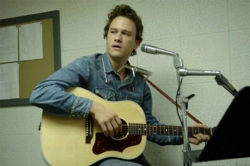
The image of the Wandering Jude of Dylan’s oeuvre, unsatisfied with the world as it is and still staying on the road to salvation in spite of it, shares much with another long traveled image of paths of glory, the tireless prophet Elijah.

But just as Dylan says, “To live outside the law you must be honest,” in Jewish tradition Elijah can be found everywhere, in disguise, at the gates of a city in the morning and in the houses of royalty by night; he blesses the poor, unsettles the rich, and continually shuffles the deck of fate with his many faces – like the imagined Dylan of I’m Not There– to keep people honest and humble and locked in real time.

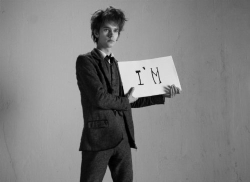
Imagine the titles of the three great films on the life and work of Bob Dylan as they might appear in the famous scene of Dylan flashing and dropping cue cards (Allen Ginsberg davening, tongue and cheek, wrapped in a prayer shawl in the background): “Don’t Look Back” – “No Direction Home” – “I’m Not There.” So too goes Haynes’ deep, passionate take on the many lives of Dylan’s seeking: flashes of intimate, gorgeous meaning that stay; and always waiting for just a little bit more.

Wednesday, July 29, 2015

Sounding Board: I Have a New Gig IV

There are things and then there are things. One of those things happens to be a new job. It's not that new -- about five months. As CEO and President of JCC Association -- the umbrella organization of the 350 sites that comprise the Jewish Community Center Movement -- every two weeks I have been posting a short piece on a song that inspires thinking about where this band of communities and opportunities might go. Find the originals at Sounding Board or, over the next few weeks, right here. The third is entitled: What's Going On?


What’s Going On?

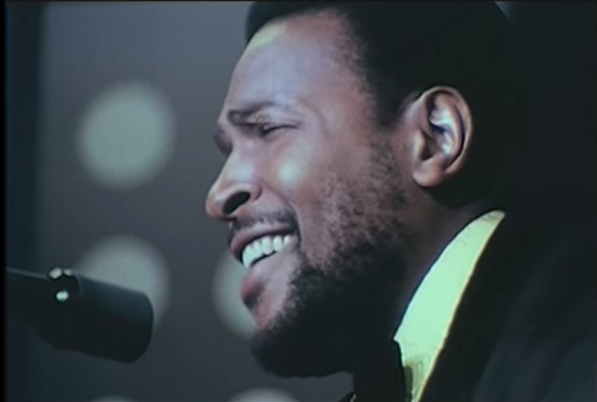
Marvin Gaye
Where is music when the world is spinning too fast, when the sky is crying, when we have lost our way?
Tests of communal will arose this week – all too fast and strong, and almost too big to fathom. Our eyes filled with the sight of friends in Baltimore embroiled in anger and unrest while those in Nepal tumbled as the ground shook and shivered beneath their feet.
Protest music is an expression of communal need to seek clarity and purpose. A protest song stepstoward our tests and goes out to greet them, a testament to how we step up to a challenge.
One of our colleagues shared with Sounding Board soul-warrior Marvin Gaye’s plea, now more than 40 years strong, as a reflection on what she believes JCC communities need to be asking of themselves, especially now:
Mother, mother
There’s too many of you crying
Brother, brother, brother
There’s far too many of you dying
You know we’ve got to find a way
To bring some lovin’ here today
Father, father
We don’t need to escalate
You see, war is not the answer
For only love can conquer hate
You know we’ve got to find a way
To bring some lovin’ here today
Picket lines and picket signs
Don’t punish me with brutality
Talk to me, so you can see
What’s going on
Another colleague turned to Bob Marley, a fierce and noble man. Maybe you believe in a master plan and maybe you do not – but what do you hold onto when you cannot believe what you see in a world is turned upside down?:
There’s a natural mystic
Blowing through the air
If you listen carefully now you will hear
This could be the first trumpet
Might as well be the last
Many more will have to suffer
Many more will have to die
Don’t ask me why
Things are not the way they used to be
I won’t tell no lie
One and all got to face reality now
Though I try to find the answer
To all the questions they ask
Though I know it’s impossible
To go living through the past
Don’t tell no lie
There’s a natural mystic
Blowing through the air
Can’t keep them down
If you listen carefully now you will hear
Such a natural mystic
Blowing through the air
We are not pro test. Would that we could just enjoy the quiet on a sunny day. But when tests come, as they always do, what choices remain but to face them? So we step towards these challenges together, never alone.
As you will see below, in Baltimore our colleagues seek to be of use to neighbors and friends, staying safe and joining hands and praying for peaceful and sustainable resolutions. In Nepal, friends stack hands to offer respite however and wherever they can.
And then there’s this from yet another colleague sending a song to Sounding Board – a message from those same boys who said all we need is love: Come together, right now.
How you and your JCC can help:
Our friends and colleagues at the Jewish Community Center of Greater Baltimore and the Associated are working with area churches, community centers and civic organizations to collect funds for immediate service to the neighborhoods affected most deeply by the unrest. If you are able to donate your time, contact the Jewish Volunteer Connection (JVC), which is coordinating community involvement in the cleanup effort in partnership with the No Boundaries Coalition.
We have compiled a list of some of the ways that you can help Nepal by supporting organizations in our family of Jewish and Israeli organizations.
shablogsong

Sunday, July 19, 2015

Sounding Board: I Have a New Gig III

There are things and then there are things. One of those things happens to be a new job. It's not that new -- about five months. As CEO and President of JCC Association -- the umbrella organization of the 350 sites that comprise the Jewish Community Center Movement -- every two weeks I have been posting a short piece on a song that inspires thinking about where this band of communities and opportunities might go. Find the originals at Sounding Board or, over the next few weeks, right here. The third is entitled: Out of Narrow Straits, But Now What?


Out of Narrow Straits, But Now What?

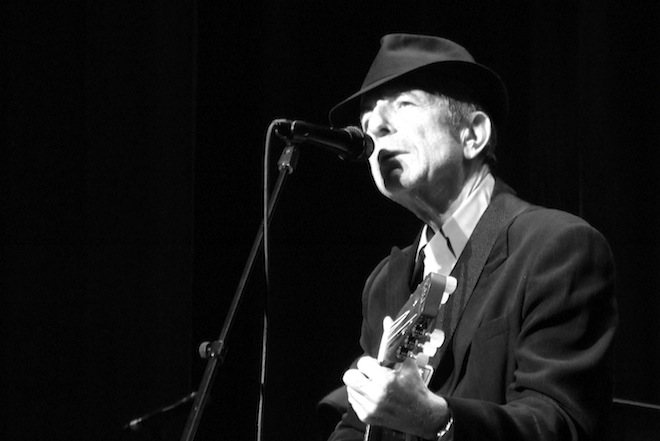
Leonard Cohen at the Arena in Geneva, 27 October 2008
Each year the traditions of Passover ask us to talk ourselves out of a terrible bind. Mitzraim — Hebrew for Egypt — literally means “narrow straits.” The only way to get through this tight squeeze is telling the story of how we escaped long ago. And the more we embellish this story, the Haggadah says, the happier our happy ending is likely to be.
But now what? For the Israelites, understanding “what’s next?” after escaping bondage took an entire generation — 40 years wandering in the desert and their descendants are still asking where the story leads.
In March during the launch of Sounding Board at the JCCs of North America Professional Conference, a group of JCC leaders spent an afternoon thinking about how Leonard Cohen’s rethinking of ancient stories like Exodus can shape today’s communal purpose.
In 2012’s “Show Me the Place,” Cohen sings:
Show me the place
Where you want your slave to go
Show me the place I’ve forgotten, I don’t know
Show me the place, where the word became a man
Show me the place, where the suffering began
Participating in a communal calling with ancient roots demands at least an inkling of belief that our steps are not just dragging tired feet across hot sand, nor that our stories are merely words to repeat, but a journey seeking something greater than ourselves.
This year, at the age of 80 — that’s two biblical generations — Leonard Cohen offered us “Born in Chains”:
I was born in chains
But I was taken out of Egypt
I was bound to a burden
But the burden it was raised
Lord I can no longer
Keep this secret
Blessed is the Name
The Name be praised
Like Cohen, is there a story we return to time and time again to describe what matters to us most? When we reflect upon our communities, are we willing to embellish our story, reinterpret it, or even start it over when we find ourselves in narrow straits? We need to consider the ways that our JCCs can open those straits, and become an essential part of the community’s reimagining of this story.
“Show me the place,” Cohen sings
Help me roll away the stone
Show me the place
I can’t move this thing alone
The chances are that if you are looking for something new in your community, there is someone nearby with a similar urge to navigate that narrow pathway with you and to help you move away that stone.
shablogsong

Wednesday, July 15, 2015

Sounding Board: I Have a New Gig II

There are things and then there are things. One of those things happens to be a new job. It's not that new -- about five months. As CEO and President of JCC Association -- the umbrella organization of the 350 sites that comprise the Jewish Community Center Movement -- every two weeks I have been posting a short piece on a song that inspires thinking about where this band of communities and opportunities might go. Find the originals at Sounding Board or, over the next few weeks, right here. The second is entitled: What is JCC Soul?.


What is JCC Soul?

IMG_5016
Listen to that. We’re starting to hear some music out there.
Before I try my hand at performing a little interpretive magic on the songs you have chosen to describe what the JCC Movement needs and wants to be, let’s ask a question: Why build a playlist to get to know what’s driving communities across North America? Why choose the pathways of music to tell our tale?
I asked Bruce Springsteen this question once. It was just Bruce and me, just me and him; so I asked Bruce the question. Sort of. I said, “My friend Bruce, what’s a great band all about?” He just looked at me and smiled.
“What’s music all about?” I asked him (This was in 2005 at the induction ceremony for U2 at the Rock and Roll Hall of Fame and Museum). And he said:
A great rock band searches for the same kind of combustible force that fueled the expansion of the universe after the Big Bang. You want the earth to shake and spit fire. You want the sky to split apart and for God to pour out…
I liked that answer very much, but I wanted to know more. So I went to Bono, and I said, “Bono, what’s music all about? I mean, what’s it really about?” Bono just stared out at all of the rock stars and hangers-on and journalists and fans at the Rock Hall as the great Bob Marley was about to be honored:
New hymns to a dancing god, redemption songs — a sexy revolution, where Jah is Jehovah on the street level — not over his people, but with his people…dressed to hustle God: ‘Let my people go,’ an ancient plea — prayers catching fire…
Now don’t get the wrong idea. These are not answers about religion even if there is a lot of Godtalk in them. But they are answers about soul. So in the spirit of the musical son who sort of knows how to ask a question, I turned to George Clinton. “What is soul?” I asked. “Soul is you, baby,” he said. And I thought, “Yes, that’s what we’re talking about. Music is going to lead us to the soul of the JCC Movement. Those songs are going to tell us all about us.”
Hold on tight. Here we go.
And add your song here.
shablogsong

Sunday, July 12, 2015

Sounding Board: I Have a New Gig I

There are things and then there are things. One of those things happens to be a new job. It's not that new -- about five months. As CEO and President of JCC Association -- the umbrella organization of the 350 sites that comprise the Jewish Community Center Movement -- every two weeks I have been posting a short piece on a song that inspires thinking about where this band of communities and opportunities might go. Find the originals at Sounding Board or, over the next few weeks, right here. The first is entitled: Let the Listening Tour Begin.
Patricia_band_during_the_Rock_Symphony_Concert_at_the_Potocky_Palace_in_Lviv_in_2011

You Get What You Give. Get Up Offa That Thing. You Cannot Win If You Do Not Play.
Melodies tripped and jangled through the New York City office of JCC Association during my first two weeks on the job as CEO and President.
You Better, You Better, You Bet.
After meeting individually with more than fifty members of our team in the first stage of an intensive assessment of our work with all of our stakeholders, I asked everyone for the song that she or he wanted to share with the family of three hundred and fifty JCCs and Ys, camps, and agencies we serve.
Friends. Power of Soul. I’ve Just Seen a Face.
Considering the millions of annual visits to our sites, the countless moments of meaning and connection and the endless possibilities JCCs offer each day — it’s no wonder our team wants to get up and sing about what we do.
What’s Going On? What’s So Funny ’bout Peace, Love and Understanding? Changes.
But we also recognize that as we enter a transition in leadership — with tremendous gratitude for what’s been built before us as well as a buzz of curiosity and determination to discover what’s next — there are many questions about what we as a movement should strive to be.
People. Natural Mystic. I Will Survive.
Music is one of the world’s great connectors — a comfort, a prophecy, a secret smile. It’s a looking glass to see ourselves and a window into the world. It’s the echo of what we think we know and a whisper of dreams we have all but forgotten.
Glory. Somewhere Over the Rainbow. Dream On. Yehiyeh Tov. New Day Rising.
Our team is listening closely: What rhythms will move our communities five, ten, or twenty years from now? What voices will blend in unexpected harmony? When you tune your ears to the sounds of the Jewish community of the future, what songs do you hear?
Listen to the #jccsoundingboard playlist here.

Sunday, May 17, 2015

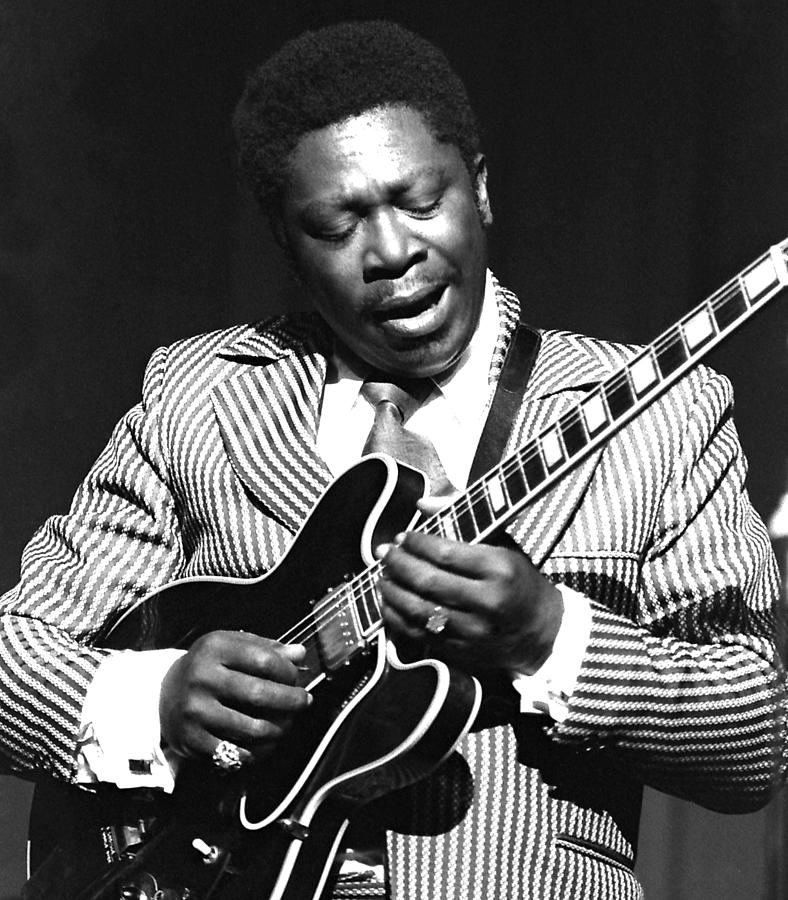
Long Live the King: B.B. King

Long, long time ago I decided to leave school, pack a rucksack and guitar, and try to touch all forty-eight states in the continental US. My cousin agreed to join me for the first leg of the trip, a swing through the south that brought us to New Orleans where we teamed up with a more seasoned traveler who convinced us against our better judgement to continue on to Mexico where we wrecked our car and were stranded for two weeks. I made it to California eventually, started a band or two, and kept looking for a code that would shape me.

Music was my guiding star then as now, and the symbolic crossroads, the place where that whole journey out of one life and into another started was the Front Row Theater. There I saw B.B. King, Albert King and Bobby "Blue" Bland two nights in a row.

B.B. King: smooth searing guitar, weeping and wailing and sailing above the stars; a booming voice full of love and humor; a grimace, a smile, warm words he had shared thousands of times with his backing band and his audience as he sweated and shimmied and glowed.

The recordings of the live shows were always my favorites, and seeing him live for the first time was a pilgrimage to witness a liturgy of the heart enacted by a High Priest who gives life to his people. I still know many of those albums note by note, having played along best as I could for years, eyes closed, imagining myself trading licks with a father, a grandfather, a great grandfather who -- despite lifetimes of difference between him and me -- assured with the giantness and gentleness of his person and music not only that the blues were an invitation I could accept, but that accepting the blues meant accepting love, and never being alone, and that even in the lowest, saddest of times the good work could get done, hauling sorrows and joys hand over hand with the King of the Blues, the One, the Only, B.B. King.

His music goes so deep -- deep as darkest dark. Yet it also buzzes with zest and vigor like purest light. There was a threshold across which B.B. King and his friends who taught the blues -- especially the electric blues -- carried an entire culture. That basket of blues held the possibility of all things, just like the arks that the Israelites carried out of Egypt.

"What's in those arks?" the passersby would say.
"One holds the Holy Torah and one holds the bones of Joseph," they replied.
"But how can you carry the living alongside the dead?" they asked.
"If not for this one, that one never could have been," they said.

Without music, it's hard to image living, but rising up for me as he did when he did, B.B. King was the rare musician whose warm, wise, simple, booming greatness offered an embrace so perfect amidst the imperfection of the world that it's hard to imagine my life itself without him.

That's a King for you, and this is his kingdom -- and feeling this way about these things is something grand and pure that cannot be explained. The King is dead. Long live the King.


Friday, December 26, 2014

Growin' Up: The Day that Bruce Springsteen Asked God

It's creation story season. The birth of Jesus of Nazareth. The birth of a new year in the Gregorian calendar. It's the dead of winter and oddly, in urges set by a standard for the yearly cycle thousands of years ago, humanity wants to renew hope and light in the dark.

bruce and band
Bruce Springsteen and the E Street Band at the Agora, 1978
Where does hope and light come from? What generates the spark that grows to a flame that affirms a path out of the cold? 

Just this week -- in time for the holiday shopping season, no doubt -- the Bruce Springsteen Empire upon which the sun probably never sets has released an official version of what acolytes of the Boss have called one of his greatest concerts ever.

The year was 1978. The place: Cleveland, Ohio. The venue: the Agora Theatre and Ballroom, a legendary concert hall seating just 1200 people that hosted nearly every rocker in the universe during the 70's and 80's. The event was the 10th anniversary of WMMS, 101 FM, the Buzzard, arguably the most influential rock station of its era, and more of a reason for Cleveland housing the Rock and Roll Hall of Fame and Museum than Cleveland's own Alan Freed who some say popularized the term rock 'n' roll. This anniversary was marked by a concert by Bruce Springsteen and the E Street Band simulcast on WMMS and a network of other like-minded AOR stations estimated to reach three million listeners around the time they kicked into "Rosalita" at the three hour mark.

Springsteen tells a tale of lost youth in the rectory, parents and a parish priest unsure how to relate to their long-haired, guitar-playing, desk-pissing charge. He must go to God, the priest says, to determine the meaning of his life, to inhabit the sources of his creation, to become the man he is meant to be. And this sends the Boss to the Big Man, of course, and the Big Man sends him (in a nicer car and with a request for divine assistance in finding a stolen tape deck) to the holy place where God awaits him. The place is packed. All of humankind is there. Everyone wants to know what it's all about. Bruce Springsteen finds a quiet corner and asks the question that all of the authorities have demanded that he ask the Lord. And so Bruce Springsteen comes to the Lord inquiring about the meaning of his life. And so the word comes down to the Boss in three words that would chart the course of all that was to come: Let it Rock.

Happy New Year.


Tuesday, December 16, 2014

New Skin for the Old Ceremony with Dylan and Cohen: The Radio Version


You wanted even more of the course New Skin for the Old Ceremony: The Music and Mythology of Bob Dylan and Leonard Cohen, right? Wait no more. Below find links to a two-part radio show inspired by the class and recorded in the Summer of 2014 on the great www.jlm.fm. (If you want to begin at the beginning of this whole enterprise, join us here.)


The commentary is in Hebrew (that's me talking...) but the tunes are in whatever language you choose. 


Sunday, November 30, 2014

Rebellion and Fun: A Glimpse into the History of Rock 'N' Roll

As reported with all due diligence on this blog in the hot summer of 2014, I recently taught a course entitled The History of Rock 'N' Roll (and Everything in It) in Ten Songs at Shalem College. Inspired by Greil Marcus' The History of Rock 'N' Roll in Ten Songs. I divided rock history into themes carried by ten tunes. (The list actually went up to eleven, but it was close enough for rock 'n' roll.)

Read more about the course here and the themes of Rebellion & Fun, Prophecy, Love & Friendship, and War & Work & Sex & Death by following the links.

Below you can watch a brief clip on the theme of Rebellion & Fun, calling on music by Chuck Berry, the Beatles, the Bently Boys, and Bob Dylan


The full list of songs from the course play list appears here:

One: Rebellion & Fun*
  • Chuck Berry, “Roll Over Beethoven” (1956)
  • The Replacements, “Bastards of Young” (1985)
  •  The Crystals, “He’s a Rebel” (1963)
  • David Bowie, “Rebel, Rebel” (1974)
  • Tom Petty, “Rebels” (1985)
  • Tracy Bonham, “Mother, Mother” (1996)
  • Little Richard,“Tutti Fruitti” (1955)
  • The Beatles, “She’s Leaving Home” (1967)
Two: Prophecy, Love & Friendship
  • Patti Smith, “Gloria: In Excelsis Deo” (1975)
  • Them, “Gloria”
  • Blind Willie Johnson, “John the Revelator” (1930)
  • R.E.M., “It’s the End of the World as We Know It (And I Feel Fine)” (1987)
  • Aretha Franklin, “I Never Loved a Man (the Way That I Love
  • You)” (1967)
  • Bruce Springsteen, “Backstreets” (1975)
Three: War & Work
  • David Crosby (The Byrds) after “Chimes of Freedom” at the Monterey Pop
  • Festival (1967)
  • Jimi Hendrix, “The Star-Spangled Banner” at the Woodstock Festival (1969)
  • The Rolling Stones, “Gimme Shelter” (1969)
  • The Bently Boys, “Penny’s Farm” (1929)
  • Bob Dylan, “Maggie’s Farm” (1965)
Four: Sex & Death
  • Meatloaf, “Paradise by the Dashboard Light” (1977)
  • Crosby, Stills, Nash and Young, “Ohio” (1970)
  • Nirvana, “Smells Like Teen Spirit” (1991)
*Songs in bold are the 10 main songs of the course; other songs on the list helped us understand them.

Tuesday, August 26, 2014

Back to School with Bob Dylan: A to Z

It's time to go back to school. Time for reading, writing, and 'rithmatic all over the world. Just in case your school's curriculum has yet to note that times have been a-changin' for more than half a century, let's make it clear here and now that a class in Bob Dylan should be required for all. Whether you are homeschooling or getting ready for your new locker, here is a back-to-school primer for your Dylan studies, A-Z.

Augustine
Nearly every song on John Wesley Harding has a main character shrouded in gray–from the Landlord to Tom Paine. The hero of the album might be Saint Augustine, a fantastical, real life Late Antiquity church father drafted into Dylan's reworking of labor standard "I Dreamed I Saw Joe Hill" via a dream of martyrdom that appears often in Dylan's work. Think "Blind Willie McTell" tracing Dylan's fantasies of America as a place where "many martyrs fell." In “I Dreamed I Saw St. Augustine,” Dylan sings a sad complaint that "No martyr is among ye now" while the singer, who had left public life at the height of his powers, returns from a public death with an enigmatic album, an altered sound and appearance, and no further comment.

Brownsville Girl
Dylan is the master of the rock 'n' roll epic. Few roll with the color, humor, and cinematic scope of "Brownsville Girl." No one knows who is who, but someone got off track. In fact, "the only thing we knew for sure about Henry Porter is that his name wasn’t Henry Porter."


California
It's one of the states in one of the countries that Dylan calls home. He dedicated not one but two Theme Time Radio shows to it. But what more compelling reason for California in our primer than it inspiring this line from the song "California" recorded early in Dylan's career and released much later:

Well, I got my dark sunglasses
I got for good luck my black tooth
I got my dark sunglasses
And for good luck I got my black tooth
Don’t ask me nothin’ about nothin’
I just might tell you the truth

Desolation Row
Fittingly, the word "desolation" comes from the Latin word desolare, desolatum, meaning "to forsake." Dylan literally sees his generation literally forsaken, frozen and dead, forcing him to create a new matrix for living. So he stares back at the world and everyone in it and rearranges their faces and gives them all another name. Now that's rock 'n' roll.

Elijah
As I wrote in a review of Todd Haynes' sort of Dylan biopic I’m Not There some time ago, Elijah might be the best prophet for thinking about rock and roll prophecy in general and Dylan's prophecy particularly. Stories of Elijah’s countless masks, rages, and demands animate the Hebrew Bible. In Jewish commentaries and folklore, Elijah can be found everywhere, in disguise, at the gates of a city in the morning and in the houses of royalty by night; he blesses the poor, unsettles the rich, and continually shuffles the deck of fate with his many faces, always in disguise, keeping people on their spiritual toes because of the possibility that he might actually be near. Yet Elijah is most famous for the moment he does not arrive at all. Remind you of anyone?

France
Last year Dylan was awarded France's highest honor, the Legion of Honour. The Guardian reported that the award was temporarily put on hold after the grand chancellor of the Legion, Jean-Louis Georgelin, declared the singer was unworthy of it, citing Dylan's anti-war politics and use of cannabis as key reasons to block his nomination.

More on this important point later.

Going, Going, Gone
Talking about The Basement Tapes jem which provided the name for Todd Haynes' film, Robbie Robertson suggested that "Going, Going, Gone" is the studio release song closest to plunging the depths reached by "I'm Not There." And it quotes grandma.

How Many Roads Must a Man Walk Down Before You Call Him a Man?
So begins "Blowin' in the Wind." An additional question might be: Can you imagine the world without this song? 

I and I
Because "I and I" includes the line "I made shoes for everyone, even you/but still I walk barefoot" we add it to the primer. There are many other reasons as well, of course, but that reason (and all of those shoes) are more than enough.

Jesus
It's simplistic to say that Dylan had a "Jesus period" when he released a series of evangelically charged albums in the late seventies. Something certainly caught fire, but falling in love with Jesus, his message, the passion he invokes in music-
–these are all so very much a part of of what makes Dylan great in different faces and names throughout his career. Even on the Christmas album. Every period is his Jesus period.

Knockin' on Heaven's Door
Everyone sings this song–even Guns 'N' Roses–but it's hard to imagine a version more potent than Warren Zevon's, sung from something like a death bed recording session on his last album. It may have taken Dylan four minutes to write it, but it just keeps being rewritten.


Last Thoughts on Woody Guthrie
Even if his high school yearbook lists his life ambition as being to "follow Little Richard," the master teacher of at least the first portion of Dylan's career is Woody Guthrie. "Last Thoughts on Woody Guthrie," written and performed in 1963, is as loving an ode of a young man to his teacher as any I know. It ends like this.

And where do you look for this hope that yer seekin'
Where do you look for this lamp that's a-burnin'
Where do you look for this oil well gushin'
Where do you look for this candle that's glowin'
Where do you look for this hope that you know is there
And out there somewhere
And your feet can only walk down two kinds of roads
Your eyes can only look through two kinds of windows
Your nose can only smell two kinds of hallways
You can touch and twist
And turn two kinds of doorknobs
You can either go to the church of your choice
Or you can go to Brooklyn State Hospital
You'll find God in the church of your choice
You'll find Woody Guthrie in Brooklyn State Hospital
And though it's only my opinion
I may be right or wrong
You'll find them both
In the Grand Canyon
At sundown
Marijuana: The French were right. Dylan smoked a lot of pot. Maybe he still does. But could there have been a more important joint smoked during the Decline and Fall of  Western Civilization that the one Dylan used to turn on the Beatles?

North Country: Wise women and men have made the convincing case that without contextualizing Dylan's vision in the Iron Range of Northern Minnesota, you just cannot understand him. I buy it.

Oh Sister
For the haunting electric violin played by Scarlet Rivera (not Einstein), for a lyric easily inserted into the Song of Songs or the Zohar, for a narrator confusing sister, father, lover, and wife, and for appearing on Desire, "Oh Sister" gets the nod.

Pretty Polly
It's hard to appreciate Dylan's resurgence in the 1990's without considering Greil Marcus' book The Old, Weird America: The World of Bob Dylan's Basement Tapes. Marcus writes so beautifully and thoughtfully about some of the possible secrets of Dylan's magic, it is tempting to think he somehow opened new seams for Dylan to connect and reconnect with audiences. In proposing Harry Smith's Anthology of American Folk Music and Dylan and the Band's The Basement Tapes as vessels of kindred spirits of America's "invisible republic"–which was the original title of the book–Marcus goes as deep and as convincingly with pop as anyone ever has. His take on the old if not ancient iterations of "Pretty Polly" from the British Isles to Kurt Cobain captures the essence of his approach,  with Dylan both a witness and a driver in the story he tells.

Queen Jane Approximately
On an album that includes "Like a Rolling Stone," "Highway 61 Revisited," and "Desolation Row," it is hard for even a classic song of longing like "Queen Jane Approximately" to stand out–but it does. Juxtaposing the words "approximately" and "queen" in a song title is already such a clever and compelling reach for the pop of his time, the fact that the song is just the invitation for the heart breaker to consider coming back makes the whole jangling journey a killer.

Rolling Thunder Revue
Dylan was hanging in his old neighborhood in the mid-1970's, even popping into gigs of old friends to lend a guitar, vocal, or harp. The Rolling Thunder Revue was an unwieldy attempt to capture some of the spirit of the Greenwich Village scene of the sixties on the giant stages that Dylan's star now demanded (including the Astrodome.) Allen Ginsberg, Joni Mitchell, Joan Baez, Ramblin' Jack Elliot, Phil Ochs, and Roger McGuinn were just a few of his guests. The 4-plus hour film Renaldo and Clara (which few have seen though many have panned) as well as monster versions of chestnuts like "One Too Many Mornings" and "Lay Lady Lay" and a wild visit to Jack Kerouac's grave–Dylan in a white mask of death every step of the way–were just a few of the results.

Stage Fright
There have been more than a few arguments about the central figure of one of the Band's last beautiful original tunes. Robbie Robertson, a man that few claim to trust as a historian but many rely upon as a teller of myth, suggests he wrote it about Dylan edging back to the stage after years away. Rick Danko sings it and it is indeed a gorgeous, sympathetic take on what it takes to "sing just like a bird."

Theme Time Radio Hour
No album, no Chronicles, no interviews, and no concerts say as much about what makes Bob Dylan tick musically than the 100 radio shows he recorded of "dreams, themes, and schemes" on Sirius XM. Humor, pathos, recipes, crooners, gangsters, TV and film clips, and music, music, music. Welcome to Bob Dylan's brain. Doctorates will be written about this show someday.

Up to Me
Like "Blind Willie McTell," a true classic which never received a proper studio release, "Up to Me" appeared as an outtake. For "Up to Me" this was 1985's Biograph, which also kicked off the trend of rockers curating box set retrospectives. "Up to Me" is studded with lyrical gems like this:

The only useful thing I did when I worked as a postal clerk
Was to pull your picture down off the wall near the cage where I used to work...
Dylan's waste bin songs often surpass the best numbers of the first team.

Velvet Underground
Professor Thomas Crow once gave a terrific talk at the Guggenheim Museum in New York about the period in 1965 when Bob Dylan and Andy Warhol essentially held the world of art and culture in their hands. It was a competition–for influence, people, hipness, money–and until his motorcycle crash, Dylan was winning as he symbolically took one of Warhol's Elvis cut-outs from the Factory in the back of a convertible and drove away. The Velvet Underground were one of Warhol's biggest gifts to the era, especially Lou Reed, a rocker even crankier and meaner than Dylan and, according to some, just as important to rock 'n' roll.


Woodstock
Dylan arrived in town at Albert Grossman's suggestion. Woodstock was a long time artists' and freaks' town, and this is where Dylan holed up (along with the Band) after his motorcycle crash. Some say the Woodstock Music and Arts Festival was located and named as it was in order to pull Dylan out of seclusion and onto the stage. It did not work.

XSara
It's always been their business, of course, and that's why it was so stunning when the song "Sara" appeared on Desire. Blood on the Tracks–known as Dylan's divorce album and which he claims he doesn't understand how people can stand–carries so much pain, presenting all kinds of suggestions of the dissolution of a marriage. But "Sara" named it in a way almost too hard to hear.

You Don't Need a Weatherman to Know Which Way the Wind Blows
One of hundreds of almost throwaway Dylan lines that sound like Scripture he pinched, this one capped "Subterranean Homesick Blues"–proto-rap, proto-punk, proto-MTV video, and also featuring Allen Ginsburg davening in the background as Dylan literally flicks signs into the air. The Weather Underground used this phrase to name themselves, emerging from the shards of sixties activism and revolutionary communities as home grown terrorists. That's what was blowing in the wind.

Zevon
Bruce Springsteen once called him a "moralist in wolf's clothing" and Dylan dug him. When Warren Zevon was dying of cancer, Dylan sang his songs on stage often. One of his favorite's was "Mutineer:"

Yo ho ho and a bottle of rum
Hoist the mainsail–here I come
Ain’t no room on board for the insincere
You’re my witness
I’m your mutineer
I was born to rock the boat
Some may sink but we will float
Grab your coat–let’s get out of here
You’re my witness
I’m your mutineer

I once owned an LP of a radio interview with Bob Dylan from the mid-’80s. He was asked if there was another trade he would ply if he had not wound up a singer. He was mumbling in the answer, but his sounds ended in a final clear phrase: “Or maybe I should just be on a boat.” Aren't you glad he spends so much time on land too?

Have a happy school year, friends.