Showing posts with label New Jewish Culture. Show all posts

Wednesday, July 29, 2015

Sounding Board: I Have a New Gig IV

There are things and then there are things. One of those things happens to be a new job. It's not that new -- about five months. As CEO and President of JCC Association -- the umbrella organization of the 350 sites that comprise the Jewish Community Center Movement -- every two weeks I have been posting a short piece on a song that inspires thinking about where this band of communities and opportunities might go. Find the originals at Sounding Board or, over the next few weeks, right here. The third is entitled: What's Going On?


What’s Going On?

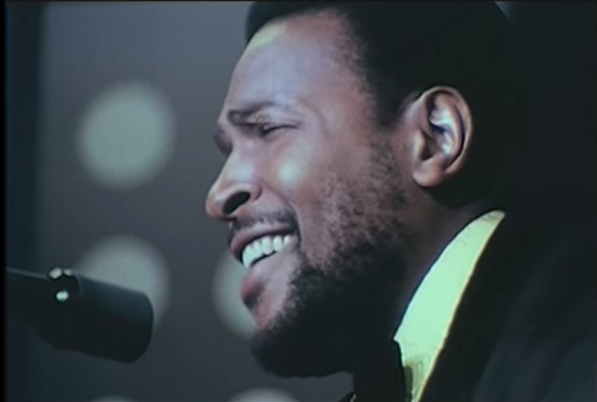
Marvin Gaye
Where is music when the world is spinning too fast, when the sky is crying, when we have lost our way?
Tests of communal will arose this week – all too fast and strong, and almost too big to fathom. Our eyes filled with the sight of friends in Baltimore embroiled in anger and unrest while those in Nepal tumbled as the ground shook and shivered beneath their feet.
Protest music is an expression of communal need to seek clarity and purpose. A protest song stepstoward our tests and goes out to greet them, a testament to how we step up to a challenge.
One of our colleagues shared with Sounding Board soul-warrior Marvin Gaye’s plea, now more than 40 years strong, as a reflection on what she believes JCC communities need to be asking of themselves, especially now:
Mother, mother
There’s too many of you crying
Brother, brother, brother
There’s far too many of you dying
You know we’ve got to find a way
To bring some lovin’ here today
Father, father
We don’t need to escalate
You see, war is not the answer
For only love can conquer hate
You know we’ve got to find a way
To bring some lovin’ here today
Picket lines and picket signs
Don’t punish me with brutality
Talk to me, so you can see
What’s going on
Another colleague turned to Bob Marley, a fierce and noble man. Maybe you believe in a master plan and maybe you do not – but what do you hold onto when you cannot believe what you see in a world is turned upside down?:
There’s a natural mystic
Blowing through the air
If you listen carefully now you will hear
This could be the first trumpet
Might as well be the last
Many more will have to suffer
Many more will have to die
Don’t ask me why
Things are not the way they used to be
I won’t tell no lie
One and all got to face reality now
Though I try to find the answer
To all the questions they ask
Though I know it’s impossible
To go living through the past
Don’t tell no lie
There’s a natural mystic
Blowing through the air
Can’t keep them down
If you listen carefully now you will hear
Such a natural mystic
Blowing through the air
We are not pro test. Would that we could just enjoy the quiet on a sunny day. But when tests come, as they always do, what choices remain but to face them? So we step towards these challenges together, never alone.
As you will see below, in Baltimore our colleagues seek to be of use to neighbors and friends, staying safe and joining hands and praying for peaceful and sustainable resolutions. In Nepal, friends stack hands to offer respite however and wherever they can.
And then there’s this from yet another colleague sending a song to Sounding Board – a message from those same boys who said all we need is love: Come together, right now.
How you and your JCC can help:
Our friends and colleagues at the Jewish Community Center of Greater Baltimore and the Associated are working with area churches, community centers and civic organizations to collect funds for immediate service to the neighborhoods affected most deeply by the unrest. If you are able to donate your time, contact the Jewish Volunteer Connection (JVC), which is coordinating community involvement in the cleanup effort in partnership with the No Boundaries Coalition.
We have compiled a list of some of the ways that you can help Nepal by supporting organizations in our family of Jewish and Israeli organizations.
shablogsong

Sunday, July 19, 2015

Sounding Board: I Have a New Gig III

There are things and then there are things. One of those things happens to be a new job. It's not that new -- about five months. As CEO and President of JCC Association -- the umbrella organization of the 350 sites that comprise the Jewish Community Center Movement -- every two weeks I have been posting a short piece on a song that inspires thinking about where this band of communities and opportunities might go. Find the originals at Sounding Board or, over the next few weeks, right here. The third is entitled: Out of Narrow Straits, But Now What?


Out of Narrow Straits, But Now What?

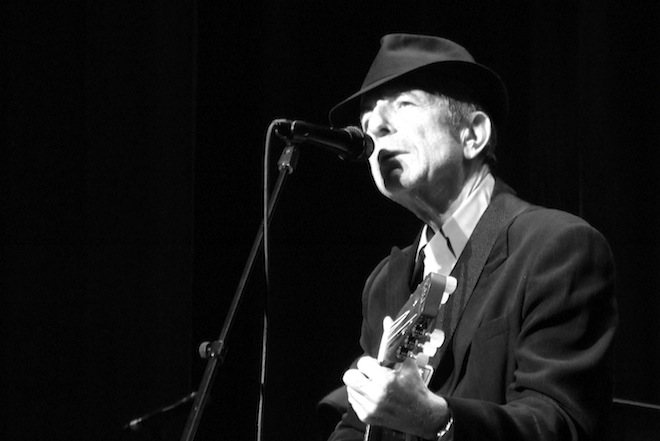
Leonard Cohen at the Arena in Geneva, 27 October 2008
Each year the traditions of Passover ask us to talk ourselves out of a terrible bind. Mitzraim — Hebrew for Egypt — literally means “narrow straits.” The only way to get through this tight squeeze is telling the story of how we escaped long ago. And the more we embellish this story, the Haggadah says, the happier our happy ending is likely to be.
But now what? For the Israelites, understanding “what’s next?” after escaping bondage took an entire generation — 40 years wandering in the desert and their descendants are still asking where the story leads.
In March during the launch of Sounding Board at the JCCs of North America Professional Conference, a group of JCC leaders spent an afternoon thinking about how Leonard Cohen’s rethinking of ancient stories like Exodus can shape today’s communal purpose.
In 2012’s “Show Me the Place,” Cohen sings:
Show me the place
Where you want your slave to go
Show me the place I’ve forgotten, I don’t know
Show me the place, where the word became a man
Show me the place, where the suffering began
Participating in a communal calling with ancient roots demands at least an inkling of belief that our steps are not just dragging tired feet across hot sand, nor that our stories are merely words to repeat, but a journey seeking something greater than ourselves.
This year, at the age of 80 — that’s two biblical generations — Leonard Cohen offered us “Born in Chains”:
I was born in chains
But I was taken out of Egypt
I was bound to a burden
But the burden it was raised
Lord I can no longer
Keep this secret
Blessed is the Name
The Name be praised
Like Cohen, is there a story we return to time and time again to describe what matters to us most? When we reflect upon our communities, are we willing to embellish our story, reinterpret it, or even start it over when we find ourselves in narrow straits? We need to consider the ways that our JCCs can open those straits, and become an essential part of the community’s reimagining of this story.
“Show me the place,” Cohen sings
Help me roll away the stone
Show me the place
I can’t move this thing alone
The chances are that if you are looking for something new in your community, there is someone nearby with a similar urge to navigate that narrow pathway with you and to help you move away that stone.
shablogsong

Sunday, July 12, 2015

Sounding Board: I Have a New Gig I

There are things and then there are things. One of those things happens to be a new job. It's not that new -- about five months. As CEO and President of JCC Association -- the umbrella organization of the 350 sites that comprise the Jewish Community Center Movement -- every two weeks I have been posting a short piece on a song that inspires thinking about where this band of communities and opportunities might go. Find the originals at Sounding Board or, over the next few weeks, right here. The first is entitled: Let the Listening Tour Begin.
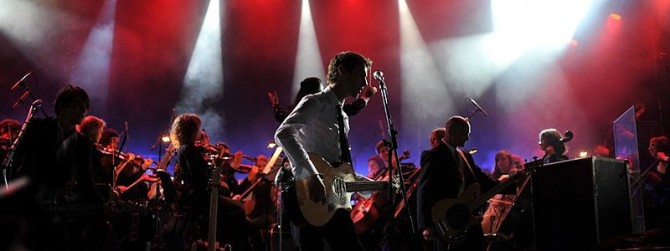
Patricia_band_during_the_Rock_Symphony_Concert_at_the_Potocky_Palace_in_Lviv_in_2011

You Get What You Give. Get Up Offa That Thing. You Cannot Win If You Do Not Play.
Melodies tripped and jangled through the New York City office of JCC Association during my first two weeks on the job as CEO and President.
You Better, You Better, You Bet.
After meeting individually with more than fifty members of our team in the first stage of an intensive assessment of our work with all of our stakeholders, I asked everyone for the song that she or he wanted to share with the family of three hundred and fifty JCCs and Ys, camps, and agencies we serve.
Friends. Power of Soul. I’ve Just Seen a Face.
Considering the millions of annual visits to our sites, the countless moments of meaning and connection and the endless possibilities JCCs offer each day — it’s no wonder our team wants to get up and sing about what we do.
What’s Going On? What’s So Funny ’bout Peace, Love and Understanding? Changes.
But we also recognize that as we enter a transition in leadership — with tremendous gratitude for what’s been built before us as well as a buzz of curiosity and determination to discover what’s next — there are many questions about what we as a movement should strive to be.
People. Natural Mystic. I Will Survive.
Music is one of the world’s great connectors — a comfort, a prophecy, a secret smile. It’s a looking glass to see ourselves and a window into the world. It’s the echo of what we think we know and a whisper of dreams we have all but forgotten.
Glory. Somewhere Over the Rainbow. Dream On. Yehiyeh Tov. New Day Rising.
Our team is listening closely: What rhythms will move our communities five, ten, or twenty years from now? What voices will blend in unexpected harmony? When you tune your ears to the sounds of the Jewish community of the future, what songs do you hear?
Listen to the #jccsoundingboard playlist here.

Tuesday, March 19, 2013

Getting DRUNK with LABA

LABALive's DRUNK at the 14th Street Y

The evening had the feel of a Greek symposium or a party with your most creative friends. Last Thursday night, LABA (a laboratory for new Jewish art inspired by classical texts) hosted DRUNK, an intoxicating evening of learning at the 14th Street Y.  The theme of the evening was wine...
 

Read more about DRUNK in The Jewish Week here.

Wednesday, December 14, 2011

The LABA Guide to Noah's Ark

This month, as part of a year dedicated to exploring the theme of Blueprint at the nexus of art, culture making, and ancient Jewish text, LABA: The National Laboratory for New Jewish Culture at the 14th Street Y offers THE LABA GUIDE TO NOAH'S ARK -- featuring heaven, hell, and all variety of places sacred and profane betwixt and between.
 
 
For my part, it's a health warning, with Phil Ochs, Noah and the Yayhoos on my mind: Namely, can spending too long in a mythological place, be it Noah's ark or the late 1960's, turn you to the bottle? More at http://www.labajournal.com/music-noah/.

Thursday, December 1, 2011

LABA Open Studios at the 14th Street Y

This week, the LABA Fellows are in the 14th Street Y Theater, experimenting and rehearsing exciting new pieces in development.
Zvi Sahar at the LABA Open Studios at the 14th Street Y.
The picture features the innovative video technology/shadow puppet work being developed by LABA artist Zvi Sahar. Zvi uses live video feed projections to integrate miniature puppetry, live visual art installations, and actors into a unique theater piece.

The Open Studios gave Zvi a chance to experiment with the help of our talented theater technical staff. Look for the premiere of his new piece at our Blueprint Festival May 17-19, 2012.

Another piece rehearsing in the theater this week is Hanna and the Moonlit Dress, a new children’s musical coming to the 14th Street Y in January.

The show is based on the beloved Israeli children’s book ” Hanna’s Shabbat Dress.” Join Hanna and her friends, including Edna the cow, Zuzzi the dog, the Coalman and the Moon, in an interactive musical theater experience. Hanna helps a stranger, and in the process accidentally dirties her white dress, newly sewn by her mother for Shabbat. Her distress is relieved, however, when she discovers the magic of a good deed. Children will help create the world of the play by crafting paper masks, costumes, and set pieces with the actors.

For more information on the LABA artists, visit http://www.labajournal.com/.

Wednesday, October 12, 2011

The 14th Street Y is pleased to partner with our friend David Winitsky on the Jewish Plays Project. Read about the project here or visit www.jewishplaysproject.org. As David shared with a group of theater artists at a kick-off gathering recently “We want you to be fully rounded, full-blooded artists,” Winitsky announced, “but when you make Jewish art, we want this to be the place where you do it.” This vision certainly suits LABA, which continues to grow as a hub for this kind of creative work.

Tuesday, October 4, 2011

Too Much to Dream and Drunken Angel

I have the pleasure of reviewing Peter Bebergal's new book Too Much to Dream for the Forward alongside Alan Kaufman's Drunken Angel in the weeks ahead. I'll save more thoughts for then, but in the meantime, note Too Much to Dream (haven't read Drunken Angel yet...) at the nexus of mysticism, music, art, and addiction as a marvelous and inspiring read this time or any time of year...

Wednesday, July 20, 2011

Reimagining Our Communal Infrastructures: The Gardens Where Innovation Should Grow

Despite its challenges, Jewish communal life remains an ecosystem of tremendous size and equity. I agree with my colleagues that the innovation ecosystem must strive for better business models and that the funding streams within this system should flow more generously. Yet, of all the efforts that might be undertaken to support a loosely affiliated network of innovative, culture changing organizations without whom Jewish communal culture lacks relevance, color, and depth, perhaps the most critical is converting the vast terrain of the Jewish infrastructure into a garden where they can grow. New Jewish Culture should be the force transforming the essence of the infrastructure we have already built.

Sunday, July 17, 2011

Towards a Jewish Cultural Policy

An Op-Ed by Stephen Hazan Arnoff and Steven M. Cohen · July 17, 2011

See the entire post on jta.org here.

NEW YORK (JTA) -- JDub Records, the innovative nonprofit Jewish music endeavor that discovered Matisyahu and numerous other artists, released 35 albums, and brought 150,000 participants to concerts and other events, announced last week that it would be closing after nine years of successful operation. The principal cause: inability to secure sufficient ongoing philanthropic support.

The impending closure of one of the most promising start-ups in the "Jewish innovative ecosystem" highlights a critical gap in the Jewish communal landscape -- the absence of what may be called a “Jewish cultural policy” in North America.

We have policies -- or at least policy discourse -- in many domains. They range as wide as Jewish education, outreach, combating anti-Semitism, Israel advocacy, poverty, Jewish peoplehood and much more.

Just a century ago, communal leaders addressed such critical issues as the family, employment, health, English language acquisition and citizenship. As needs changed, so did the Jewish communal policy discourse. But however extensive is the current communal agenda, our planfulness has not yet extended to the realm of Jewish culture, signifying a lack of Jewish cultural policy on local, national and continental levels.

In the past decade, a cluster of loosely connected enterprises have been supported by family foundations, UJA-Federation of New York, the Foundation for Jewish Culture and others. These efforts have produced an array of impressive Jewish cultural practices, mostly grass roots, modular and low cost. They include anchors of local cultural engagement like Moishe House, as well as projects creating content and disseminating Jewish cultural innovation such as Storahtelling, Hazon and, quite prominently until now, JDub Records.

To these endeavors must be added many thousands of writers, poets, fine artists, dancers, actors, directors, filmmakers, musicians, dancers and other culture makers, as well as the venues they present their work -- from bookstores, museums and galleries, clubs and film festivals to the rich virtual landscape of YouTube and beyond. These, and so much more, constitute the critical elements in North America’s “Jewish cultural ecology."

But to be a Jewish artist or cultural innovator in the Jewish community today often means serving small pockets of interest on the fringe or to be drafted occasionally into preformed communal templates -- fundraisers, traditional celebrations or outreach programs -- where art is instrumental rather than generative, dogmatic rather than dynamic.

Sadly, with the economy in a continual state of flux, the arts often are the first programmatic cut made by organizations. The JDub news is no isolated instance.

There is a compelling case for significant, sustained and strategic investment in creative people, infrastructure and values. The benefits of a rich culture have been amply established for society as a whole. Richard Florida’s "The Rise of the Creative Class" demonstrates the value of a thriving cultural life for economic vitality. Florida's three T’s of "Talent, Tolerance and Technology" suggest lessons that Jewish communal leaders can apply to the Jewishly engaged creative class of thinkers, producers, organizers, artists, performers, promoters and patrons.

The edgy, innovative environments that artists construct can function as powerful forces driving the wider society. The Jewish world desperately needs a lively margin for new ideas to influence and stimulate what many -- perhaps young adults in particular -- broadly see as a stultified and uninspiring Jewish community.

What do artists need and want? They seek peers in a creative community of work; inspiration in the form of dialogue, study and engagement to enrich both the product and process of their work; deadlines and structure within which this work can be accomplished; space for work to be created and presented; and a public forum for the wider community to experience, consume and relate to the work.

Notwithstanding the reputations for effectiveness of North American Jewish artists and the projects and institutions with which their work is affiliated, the organized Jewish community lacks a systematic and articulated cultural policy to advocate for and sustain the creative potential embodied by this work.

A Jewish cultural policy would ask three basic sets of questions:

1. What is the nature, extent, quality, value and impact of the Jewish cultural life? In short, why is Jewish culture important?

2. What is the Jewish cultural life we would want to have?

3. How do we move from the current reality to the desired ideal with effective strategies, resources and implementation?

Jewish communities should act decisively to place a creative class of artists and culture makers in core institutions, offering space for artists to gather, study, create, explore and present their work within a Jewish communal context and calendar. At the same time, artists, thinkers and culture makers should dialogue with institutional leaders and funders in mini think tanks and incubators, tackling core issues of how to create a vibrant Jewish community.

A society without a vibrant and respected creative class lacks the imagination and inspiration to innovate and grow. The last decade has offered indications of a Jewish renaissance, as new forms of Jewish cultural work have emerged in conjunction with simultaneous advances in Jewish learning, new digital media, social justice and Jewish spiritual communities.

A Jewish cultural policy on the local, regional and continental levels that smartly and strategically fosters Jewish cultural endeavors will ensure the recent gains in Jewish cultural life, with benefits on many levels -- cultural, spiritual, educational, political and much more. And a real commitment to Jewish culture can preclude disheartening and wasteful reversal such as the winding down of JDub.

Stephen Hazan Arnoff is executive director of the 14th Street Y in New York City, where he founded and directs LABA: The National Laboratory for New Jewish Culture. Steven M. Cohen is a research professor at Hebrew Union College-Jewish Institute of Religion and director of the Berman Jewish Policy Archive at NYU Wagner.)

See the entire post on jta.org here.